- Rapport
- Energisystem
Blowing in the Wind
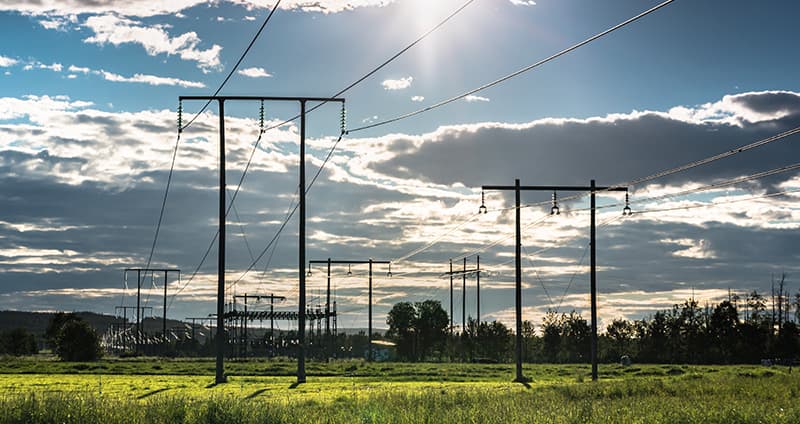
During the last few years several European countries have introduced capacity mechanisms. However, compared to the rest of Europe the Nordics are unique by having a very significant amount of hydro power. The flexibility of hydro power makes it ideal for balancing the short-term variations of wind and solar power production. This means that the cost-benefit analysis of capacity mechanisms looks different in the Nordics than in the rest of Europe. Moreover, a “market solution”, i.e. a market for capacity created by the market participants, may develop before a capacity mechanism based on further regulation of the electricity market is conceived to be warranted.
The future development of the electricity supply system, in the Nordics as well as in Europe as whole, is a complex process in which technological and institutional development coupled with legislation are driving forces. Economics is essentially about understanding how economic incentives are formed and affect behavior under different technological, institutional and regulatory conditions. Thus, economic research with a focus on electricity market design and related topics has the potential to provide useful insights and guidance both to decision makers in government, industry and finance, and to individual households.
Rapporter och publikationer
Här listas rapporter och resultatblad från programmet.
- Rapport
The Value of Lost Load in Swedish Industry 2021-787
Här gör forskarna en uppskattning av kostnaden för strömavbrott i den svenska industrisektorn. Beräkningarna baseras på kostnader för avbrott på olika industrianläggningars faktiska användning av el och de värden som den användningen skapar.
|2021:787Thomas Broberg, Runar Brännlund, Tommy Lundgren, Lars Persson
- Rapport
Economy-wide Analysis of Swedish Nuclear Power and Electricity Certificates 2020-685
Här analyseras svensk energi- och klimatpolitik i ett övergripande perspektiv. Grundtanken har varit att studera hur ekonomins alla marknader anpassar sig till olika policy-förändringar.
|2020:685Bengt Kriström, Chris Boehringer, Per-Olov Johansson, Chandra Kiran and Xiao Hua
- Rapport
Intermittency and Pricing Flexibility in Electricity Markets 2019-588
How can increasing intermittent power generation in the Swedish electricity system be managed in a more market-oriented and cost-efficient way?
|2019:588Jūratė Jaraitė, Andrius Kažukauskas, Runar Brännlund, Chandra Kiran, Bengt Kriström
- Rapport
Blowing in the Wind 2019-587
Thus the “Swedish” electricity market is now part of an integrated Nordic electricity market, more and more integrated with the continental European electricity markets. Parallel to this integration process the European electricity supply system is in a state of transition, with increasing shares of non-dispatchable wind and solar power as the key feature. The changes underway will have consequences for the technical operation of the system but also for the electricity trading arrangements.
|2019:587Lars Bergman and Chloé Le Coq