- Rapport
- Värme och kyla
Nano-XRF Analysis for Metal Speciation in Ash
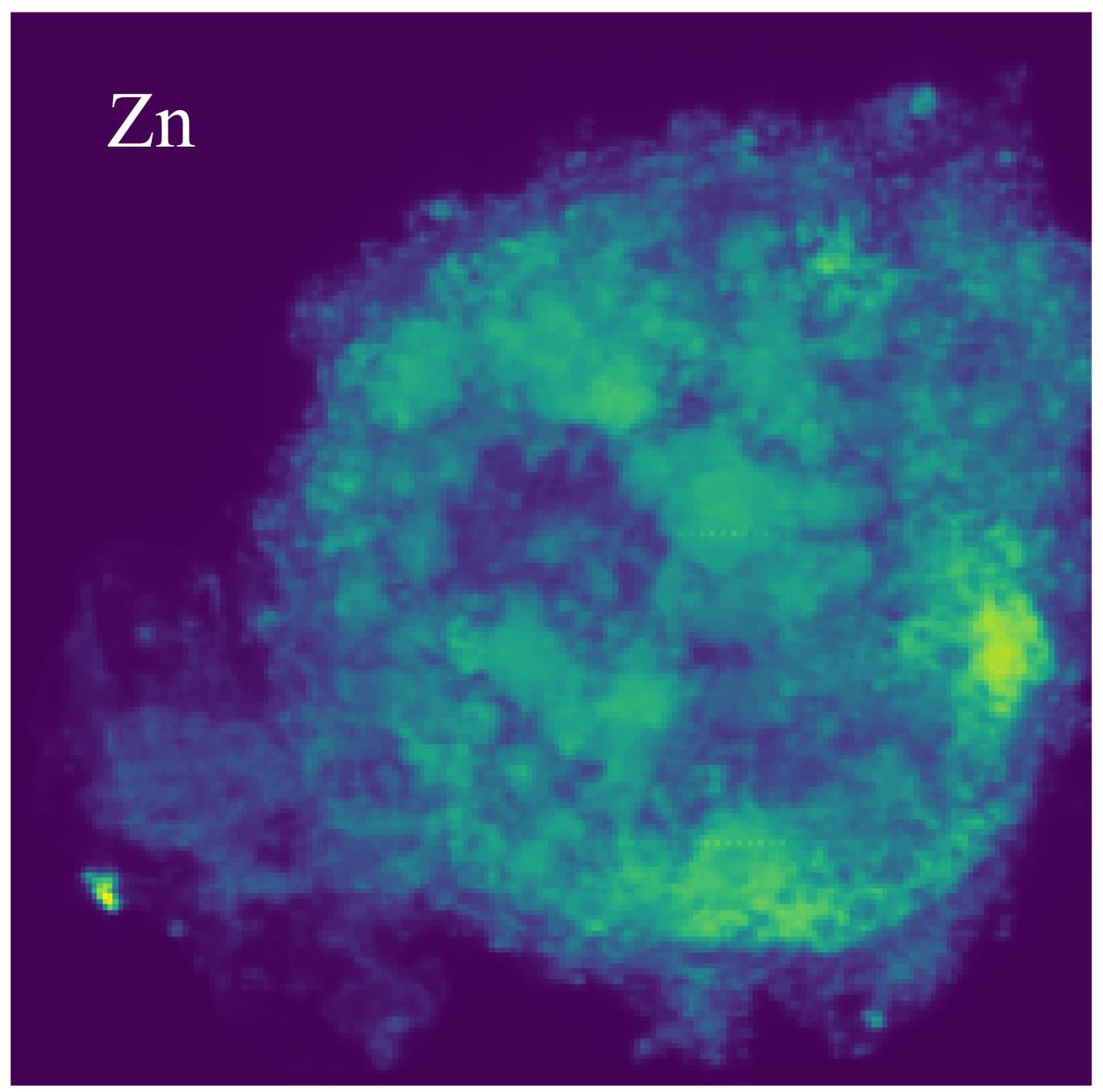
Analysis of nano-XRF elemental maps can provide important insights about which elements often occur colocalized on a sub-particle scale, thus helping to suggest possible chemical forms present in the fly ash. Analyzing large amounts of nano-XRF data comes with several challenges, such as collinearity of elemental concentrations and particles with mixed phases. Within this project several different statistical approaches for analysis of nano-XRF data were identified and evaluated. The overall aim is to explain which elements are often colocalized with transition elements such as Zn, an element important both from environmental leaching and extraction viewpoint, in fly ash particles.
The methods evaluated include pixel selection based on correlation trends, cluster analysis, and factor analysis. The evaluated methods have their pros and cons, whereof some could explain parts of the elemental behavior of Zn in the fly ash particles. But none could handle the full complexity of the ash data. We therefore suggest alternative options to be explored in future analysis efforts.
Rapporter och publikationer
Här listas rapporter och resultatblad från programmet.
- Rapport
Nano-XRF Analysis for Metal Speciation in Ash
Metals in waste incineration fly ash pose a challenge as their presence often leads to the ash being classified as hazardous waste. Yet these metals also represent valuable resources for recycling. Recovering metals from ash reduces the need for mining, improving resource utilization, and lowers the risk of metals leaching into the environment. Ash residues with low or non-soluble content of metals can be used in construction materials. Also in this context, the chemical form of the metals in the ash is essential as it governs solubility.
|2026:1187Fanny Begman, Jenny Rissler, Linda Hartman, Karin Karlfeldt Fedje- Rapport
Hållbar användning av aska – en syntesrapport
Målet med den här syntesrapporten är att berätta om den breda verksamhet som pågår i Askprogrammet och att sprida forskningsresultaten från programmet. Innehållet i rapporten kan också ge underlag till kommande projekt och kartlägga var luckor i forskningen finns.
|2025:1055Marie Kofod-Hansen och Andrea Bille Pettersson, Energiforsk, samt Benjamin Forsmark, Södra
- Rapport
Aktiv inbindning av koldioxid i energiaskor genom CCU
Den här förstudien belyser möjligheter och utmaningar kopplade till aktiv karbonatisering av energiaskor – en process där koldioxid binds kemiskt i askans mineraler och bildar stabila karbonater.
|2025:1129Jenny Westerberg och Julia Renström, Profu
- Rapport
Bottenaska som ersättare till cement i klimatförbättrad betong
Den här studien undersöker potentialen hos bottenaska från förbränning av kommunalt avfall (municipal solid waste incineration bottom ash, MSWIBA) som delvis ersättning för cement i betong – ett innovativt steg mot en mer hållbar byggindustri.
|2025:1117Alireza Bahrami, Mathias Cehlin, Marita Wallhagen, Oliver Nexén, Elsa Paul